
Time to Switch to REAL-TIME Monitoring??
Is It Time to Move to Real-Time Monitoring for Your Critical Communications Network?
When was the last time you discovered an issue with your trunked radio network before your users did?
For many organisations that rely on critical communications systems, the answer is uncomfortable. Whether supporting emergency services, utilities, transport operators, mining operations, airports, or industrial facilities, communication networks are often monitored through a combination of alarms, periodic health checks, site inspections, and user-reported issues.
The challenge is that today's operational environments demand far more than reactive maintenance. As critical communications systems become increasingly interconnected and relied upon for operational safety, business continuity, and incident response, organisations are beginning to ask a fundamental question:
Is it time to move from traditional monitoring to real-time network visibility?
The Growing Importance of Network Awareness
A trunked radio network is much more than a collection of base stations and repeaters. It is a complex ecosystem of RF infrastructure, transport networks, dispatch platforms, gateways, consoles, power systems, and applications that must work together seamlessly.
When any component begins to degrade, the effects may not be immediately obvious. Coverage gaps can emerge, latency can increase, channels can become congested, and redundant systems may fail without anyone realising until a critical event occurs.
The problem is not necessarily failures—every network experiences faults from time to time. The real issue is how quickly those faults are detected and acted upon.
Traditional monitoring approaches often rely on:
- Scheduled maintenance inspections
- Basic alarm notifications
- Manual log reviews
- User complaints and incident reports
- Periodic performance reporting
While these methods have served organisations well for many years, they can leave significant blind spots in the periods between checks.
The Difference Between Reactive and Real-Time
Imagine receiving a call from operational staff reporting poor radio performance at a critical site.
A reactive approach triggers an investigation after the issue has already affected users.
A real-time monitoring approach may have already identified:
- A degrading backhaul connection
- Increasing channel occupancy trends
- Site battery performance issues
- Environmental conditions impacting equipment
- Hardware components operating outside normal thresholds
In many cases, engineering teams can begin remediation before service degradation becomes noticeable to end users.
This shift represents a significant change in operational philosophy—from finding out what happened to knowing what is happening right now.
Improving Service Availability
For organisations running mission-critical communications, availability is often the most important performance metric.
Every minute of unexpected downtime can impact operational efficiency, public safety, worker safety, or customer service.
Real-time monitoring enables operators to:
- Detect issues immediately
- Correlate faults across multiple systems
- Identify emerging risks before they become outages
- Reduce mean time to detection (MTTD)
- Improve mean time to repair (MTTR)
The result is often higher network availability and greater confidence from users who depend on critical communications systems every day.
From Alarms to Intelligence
Many communications systems already generate alarms. The challenge is that alarms alone do not provide context. A single site alarm may be straightforward. However, a large network can generate hundreds or thousands of alarms during a significant event.
Modern real-time monitoring platforms move beyond simple alerting by providing:
- Trending and Analytics - Historical and live performance data to help organisations spot patterns that would otherwise remain hidden.
- Correlation - Faster determination of root problem causes and therefore solutions, in identifying relationships between network events.
- Predictive Insights - Trend analysis, allowing organisations to identify equipment approaching failure before it creates service impacts.
- Network-Wide Visibility - A single, co-ordinated view across radio, IP, power, transmission, and supporting infrastructure allowing for network-wide visibility. One significant difference is moving from a flood of alarms to actionable operational intelligence.
Enhancing Operational Resilience
The last few years have highlighted the importance of resilience across critical infrastructure sectors.
Extreme weather events, power disruptions, cyber threats, and increasing operational demands place additional pressure on communications networks.
Real-time monitoring enhances resilience by providing:
- Immediate awareness of abnormal conditions
- Faster incident response
- Validation of redundancy performance
- Improved disaster recovery readiness
- More effective management of geographically dispersed assets
When an incident occurs, every minute matters. Access to live operational insights can make the difference between a contained issue and a major service disruption.
Supporting Smaller Teams
A growing challenge across the communications industry is the availability of specialist technical resources.
Many organisations are expected to support increasingly complex networks with the same—or even fewer—engineering personnel.
Real-time monitoring can act as a force multiplier by:
- Automating routine health checks
- Prioritising critical issues
- Providing proactive notifications
- Reducing the burden of manual monitoring
- Allowing technical teams to focus on higher-value activities
Rather than spending time searching for problems, engineers can focus on solving them.
The Business Case Beyond Technology
The benefits of real-time monitoring extend beyond technical performance. Decision-makers increasingly want visibility into operational risk, asset performance, and service outcomes.
A modern monitoring platform can help organisations:
- Justify infrastructure investments
- Demonstrate service-level compliance
- Improve maintenance planning
- Reduce operational costs
- Extend asset lifecycles
- Strengthen stakeholder confidence
In many cases, the value comes not simply from preventing outages, but from making better-informed operational and financial decisions.
So, Is It Time?
Not every organisation is at the same stage of its monitoring journey.
Some networks still operate effectively with traditional monitoring approaches. Others are already investing in advanced analytics and predictive capabilities.
However, one thing is becoming increasingly clear: as critical communications networks become more complex and more essential to operations, the cost of not knowing what is happening in real time continues to rise.
The question is no longer whether real-time monitoring provides value.
The real question is:
Can your organisation afford to wait until users report a problem before you know it exists?
For operators of trunked radio and critical communications networks, real-time monitoring is rapidly evolving from a desirable capability into an operational necessity. Organisations that embrace this visibility gain not only a clearer picture of network health, but also the ability to move from reactive response to proactive network assurance—improving reliability, resilience, and confidence when it matters most.



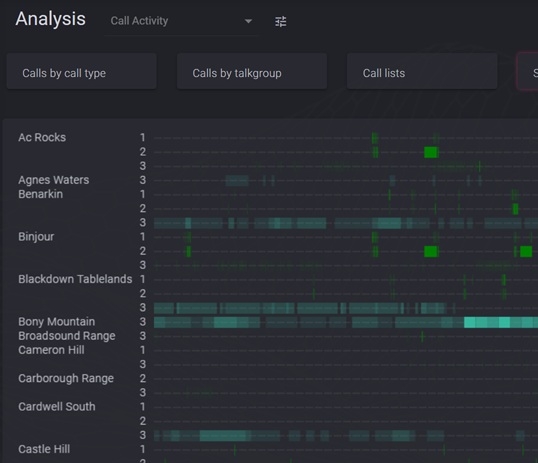
See your world, from our Viewpoint.

